
What Factors Should I Consider When Choosing a Debt Recovery Agency in India?
Recovering overdue payments can be one of the biggest challenges for businesses in India. Whether the outstanding amount comes from unpaid invoices, business loans, credit sales, personal loans, or delayed corporate payments, prolonged recovery can affect cash flow and business growth. For this reason, many businesses choose to work with a professional debt recovery agency in India.
However, selecting the right recovery agency requires careful consideration. The agency you choose will communicate with your customers, clients, borrowers, or debtors on your behalf, so professionalism, legal compliance, experience, and reputation are extremely important.
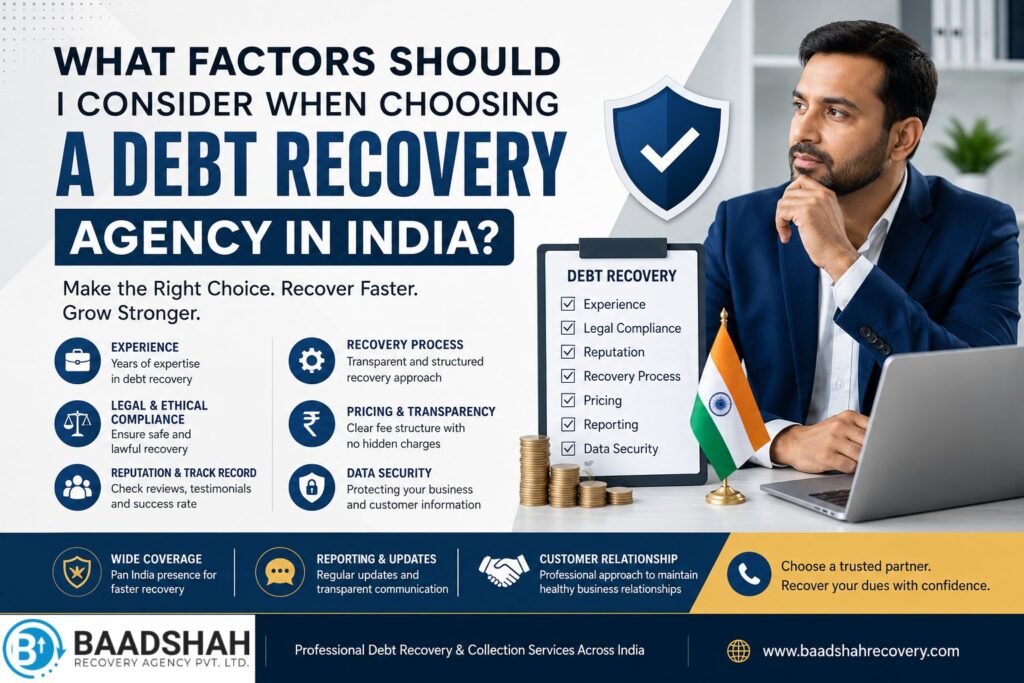
Here are the key factors you should consider before hiring a debt recovery agency in India.
1. Experience and Industry Expertise
The first factor to consider is the agency’s experience in debt recovery. An experienced agency is more likely to understand different types of debt, debtor behavior, documentation requirements, and effective recovery strategies.
Ask how long the agency has been operating and whether it has experience handling cases similar to yours. For example, a business with unpaid B2B invoices may require a different recovery approach than a bank or NBFC dealing with loan defaults.
A professional agency should ideally have experience with areas such as:
- B2B debt collection
- Unpaid invoice recovery
- Corporate payment recovery
- Loan and EMI recovery
- Commercial debt collection
- Cheque and payment recovery
- Consumer debt collection
- Bad debt recovery
Industry-specific experience can help the agency develop a more appropriate recovery strategy.
2. Legal and Ethical Compliance
Debt recovery must be handled responsibly and within applicable Indian laws and regulations. Aggressive, threatening, or unlawful recovery practices can create serious legal and reputational problems for your business.
Before appointing an agency, ask about its recovery procedures and compliance policies. A professional debt collection company should focus on lawful communication, proper documentation, respectful interaction, and appropriate escalation procedures.
This is particularly important when recovering money from consumers, borrowers, employees, or individual customers.
The right agency should help you recover legitimate outstanding amounts without exposing your business to unnecessary legal or reputational risks.
3. Reputation and Track Record
Reputation is another important consideration. Before signing an agreement, research the agency online and look for reviews, testimonials, case studies, and information about its services.
You should also consider whether the agency has worked with businesses of a similar size and industry.
A reliable debt recovery agency in India should be able to explain its approach and provide reasonable evidence of its experience without making unrealistic promises.
Be cautious of companies that guarantee that every case will be recovered or promise extremely fast results regardless of the circumstances. Debt recovery depends on factors such as the validity of the claim, documentation, debtor’s financial position, and willingness to pay.
4. Range of Debt Recovery Services
Different businesses have different recovery requirements. Therefore, choose an agency that provides services relevant to your specific needs.
For example, a company with significant outstanding invoices may need an unpaid invoice collection agency, while a financial institution may require specialized loan recovery services.
Consider whether the agency offers:
- Debt collection services
- Money recovery services
- B2B payment collection
- Invoice recovery
- Corporate debt recovery
- Loan recovery
- Credit collection
- Commercial debt recovery
- Cheque recovery
- Overseas debt recovery
Choosing an agency with multiple capabilities can make it easier to manage different types of outstanding accounts through one professional service provider.
5. Recovery Process and Strategy
Ask the agency to explain its recovery process before hiring it. A professional agency should have a structured approach rather than simply making repeated calls to the debtor.
The process may include reviewing account information, verifying documentation, contacting the debtor, understanding the reason for non-payment, negotiating payment arrangements, following up on commitments, and escalating appropriate cases when necessary.
You should understand:
- How the agency receives and evaluates cases.
- How debtors are contacted.
- How frequently follow-ups are conducted.
- How payment commitments are monitored.
- How recovered funds are reported.
- What happens if the debtor refuses to cooperate.
A transparent process gives you greater confidence that your accounts are being handled professionally.
6. Communication and Reporting
Regular communication between your business and the recovery agency is essential.
Ask whether you will receive regular updates regarding the status of your accounts. Good reporting should help you understand which accounts have been contacted, what responses were received, what payments have been promised, and which cases require further action.
Depending on the agency, reporting may be provided through emails, spreadsheets, dashboards, or periodic account statements.
Clear reporting allows your finance team to monitor recovery performance and maintain accurate records.
7. Fees and Pricing Structure
Cost is an important factor, but it should not be the only factor when selecting a recovery agency.
Debt recovery agencies may use different pricing models depending on the nature and value of the accounts. Some may charge a contingency-based fee, while others may use fixed or customized arrangements.
Before signing a contract, clarify:
- Agency fees
- Percentage-based recovery charges, if applicable
- Minimum charges
- Additional expenses
- Taxes and other applicable costs
- Payment terms
- Charges for unsuccessful cases
Avoid choosing an agency solely because it offers the lowest price. An inexperienced or poorly managed agency may cost your business more through delays, ineffective communication, or damaged customer relationships.
8. Geographic Coverage
If your business has customers or debtors across different cities or states, geographic coverage becomes particularly important.
Ask whether the agency can handle cases across India and whether it has a network or operational presence in the locations where your debtors are based.
For businesses with nationwide operations, working with an agency that can manage recovery cases across multiple regions can simplify the process and improve coordination.
9. Data Security and Confidentiality
Debt recovery involves sensitive business and customer information. This can include invoices, loan details, contact information, transaction records, agreements, and financial documents.
Therefore, data security should be a major consideration.
Ask the agency how it stores, accesses, shares, and protects client information. You should also review confidentiality clauses in the service agreement before sharing sensitive account details.
A professional agency should treat your business information and debtor data with appropriate confidentiality and security controls.
10. Customer Relationship Management
Debt collection does not always mean ending a customer relationship. In many cases, the debtor may be a valuable customer experiencing a temporary cash-flow problem.
A professional recovery agency should understand the importance of balancing recovery with customer relationships.
Polite communication, reasonable negotiation, payment plans, and professional follow-ups can sometimes help recover money while preserving the possibility of future business.
This is especially important for companies operating in competitive B2B markets.
11. Transparency and Contract Terms
Always read the service agreement carefully before appointing an agency.
The agreement should clearly define the responsibilities of both parties, fee structure, recovery procedures, confidentiality obligations, reporting requirements, payment handling, termination terms, and dispute-resolution provisions.
Do not hesitate to ask questions about clauses you do not understand.
A transparent agency should be comfortable explaining its terms before you commit.
12. Choose a Professional and Reliable Partner
Ultimately, choosing a debt recovery agency is about more than recovering outstanding money. You are selecting a partner that will represent your business while communicating with your customers and debtors.
For businesses looking for professional recovery support, Baadshah Recovery Agency provides debt recovery and collection solutions for businesses, corporates, lenders, and other organizations.
The agency focuses on areas such as B2B debt collection, unpaid invoice recovery, corporate payment recovery, loan recovery, commercial debt recovery, and other payment recovery requirements.
Conclusion
Choosing the right debt collection agency in India requires careful research. Experience, legal and ethical practices, reputation, recovery strategy, communication, pricing, geographic coverage, data security, and customer handling should all be evaluated before making a decision.
Do not select an agency simply because it promises quick results or charges a low fee. Instead, look for a professional organization that follows a structured recovery process, communicates transparently, protects confidential information, and understands the importance of your customer relationships.
A well-chosen debt recovery partner can help your business improve cash flow, reduce the burden on your internal finance team, and pursue outstanding payments in a professional and systematic manner.
FAQ
1. What is a debt recovery agency in India?
A debt recovery agency in India is a professional organization that helps businesses, lenders, financial institutions, and other organizations recover legitimate outstanding payments from customers, borrowers, or debtors through structured and professional recovery processes.
2. How do I choose the best debt recovery agency in India?
Consider the agency’s experience, reputation, legal and ethical practices, recovery process, service coverage, pricing, reporting system, data security, and ability to handle cases similar to yours.
3. What types of debt can a recovery agency collect?
Depending on its services, a recovery agency may handle unpaid invoices, B2B debts, corporate payments, commercial debts, loans, EMIs, credit accounts, cheques, and other legitimate outstanding payments.
4. Is hiring a debt recovery agency worth it for a business?
It can be beneficial when internal collection efforts are taking significant time or when customers have delayed payments for an extended period. A professional agency can provide structured follow-ups and recovery support while allowing the business to focus on its core operations.
5. How much does a debt recovery agency charge in India?
Fees vary depending on the agency, type and value of the debt, complexity of the case, and recovery arrangement. Some agencies may use percentage-based fees, fixed charges, or customized pricing. Always clarify the complete fee structure before signing an agreement.
6. How long does debt recovery take in India?
There is no fixed recovery timeline. The duration can depend on the amount owed, documentation, debtor’s financial situation, willingness to pay, communication, and complexity of the case.
7. Can a debt recovery agency recover unpaid business invoices?
Yes. Agencies offering commercial or B2B debt collection services may assist businesses with overdue invoices by contacting debtors, following up on outstanding payments, negotiating payment arrangements where appropriate, and monitoring commitments.
8. Why is legal compliance important in debt recovery?
Legal and ethical compliance helps ensure that recovery activities are conducted professionally and reduces the risk of inappropriate collection practices, disputes, or reputational damage to the client.
9. What should I ask a debt recovery agency before hiring it?
Ask about its experience, recovery process, service areas, pricing, reporting system, confidentiality practices, types of debts handled, contract terms, and how unsuccessful or disputed cases are managed.
10. Can a debt recovery agency handle B2B debt collection?
Yes. Many professional agencies provide B2B debt collection services for businesses dealing with overdue invoices, commercial payments, outstanding service fees, and other business-related receivables.

Leave a Comment